




























JETRO Invest Japan Report 2025
Chapter3. Initiatives to Expand FDI into Japan Entering a New Phase Section3. [Discussion] The Role of Overseas Capital and Key Support Organizations in Building a World-Class Startup Ecosystem
The growth of Japanese startups has been remarkable. Over the past decade, the number of companies that have raised funds has increased by more than 1,000, and the total amount of funding raised has expanded more than fivefold. However, compared with other advanced startup ecosystems around the world, Japan still faces challenges in producing startups that can scale globally, as reflected in its relatively small number of unicorns (*1). In order to further increase the number of world-class startups originating in Japan, as well as attract excellent startups from overseas while strengthening the overall ecosystem, it is necessary to promote globalization—not only by bringing in overseas risk capital, but also by incorporating advanced know-how, human resources, and cultural practices from leading regions of the world.
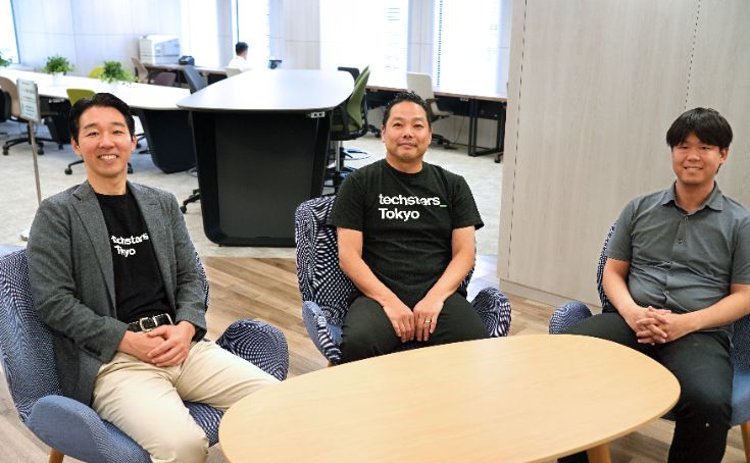
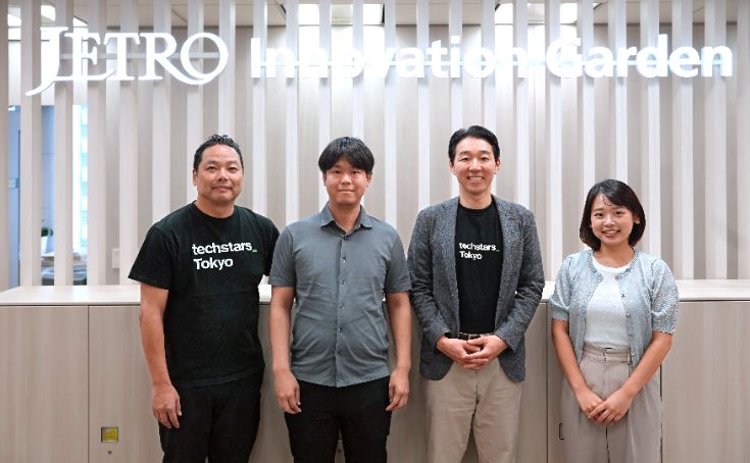
For this discussion, we invited Yuki Shirato, Managing Director of Techstars Tokyo—U.S.-based and one of the world's largest pre-seed investors, which established its Japan office in 2024—and Takuya Goto, CEO of AssetHub, a portfolio company of Techstars. We asked them about the current state and future outlook of Japan's startup ecosystem.
[The event was held on October 3, 2025, moderated by Noriya Tarutani, Deputy Director-General, Innovation Department, JETRO (Head of JETRO Startup)]
Managing Director of Techstars Tokyo
Yuki Shirato
AssetHub CEO
Takuya Goto
Deputy Director-General, Innovation Department, JETRO Head of JETRO Startup
Noriya Tarutani
Do We Have Entrepreneurs in Japan with a Global Mindset?
(Titles omitted below)
Tarutani (Moderator): Thank you for joining us today for this roundtable discussion, a new initiative under the JETRO Invest Japan Report. In this context, while JETRO's Startup Division primarily supports Japanese startups in expanding overseas, today we will focus on the significance of attracting overseas capital and investors to revitalize Japan's startup ecosystem. To begin, I'd like to ask each of you to introduce yourselves and briefly describe your organizations.
Shirato: Techstars is an accelerator (*2) founded in Colorado, USA, in 2006. Brad Feld, one of the co-founders, is said to have coined the term "accelerator," and David Cohen, another co-founder, continues to serve as CEO (There are two other co-founders, four in total). Techstars operates under the philosophy, "Talent is everywhere." While there are other equity (*3) accelerators of a similar scale, many of them bring entrepreneurs together at one location in the U.S. for development. In contrast, Techstars establishes locations around the world and discovers talented entrepreneurs locally by partnering with influential organizations in each region. In Tokyo, we run programs in collaboration with JETRO and Mitsui Fudosan. As for myself, I'm a serial entrepreneur who has co-founded three companies. Before that, I worked as a Registered Foreign Lawyer in several countries, including the United States, handling venture capital (VC) and startup fundraising transactions.
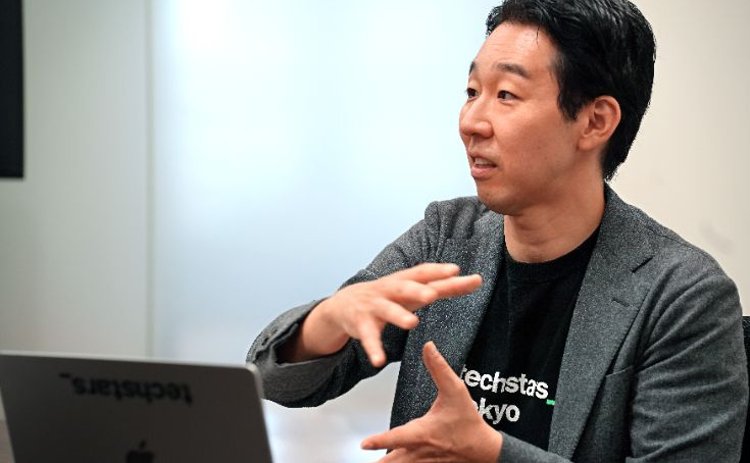
Managing Director of Techstars Tokyo Yuki Shirato
Goto: AssetHub, founded in the United States in 2023, develops and provides AI-powered game development tools. Prior to that, in 2018, I co-founded Gaudy, a Web3 (*4) startup in Japan. However, I felt constrained by Japan's regulatory environment and the limited market scale, and with a strong desire to "compete on a global standard," I decided to go independent and founded AssetHub. In summer 2024, we joined the Techstars Tokyo accelerator program and most recently, we successfully raised a total of 300 million yen in our seed round from multiple foreign angel investors including several Techstars Tokyo mentors, as well as the Techstars global follow-on fund, and the B2B-focused VC firm Archetype Ventures.
Tarutani (Moderator): Looking briefly at the landscape of Japanese startups, in 2024, 3,480 companies in Japan raised a total of 874.8 billion yen—an increase of about 1,400 companies and more than fourfold in funding compared to 2015 (Chart 1).
Although the number of funded startups has decreased, compared to 2023, the amount of funding has increased, indicating an increase in the average amount raised per company. On the other hand, in terms of the number of unicorn companies, Japan had only 8 unicorns as of October 2025, while the top-ranked United States had 724 and second-ranked China had 158, showing that Japan's presence remains limited compared with other major regions in the world (Chart 2).
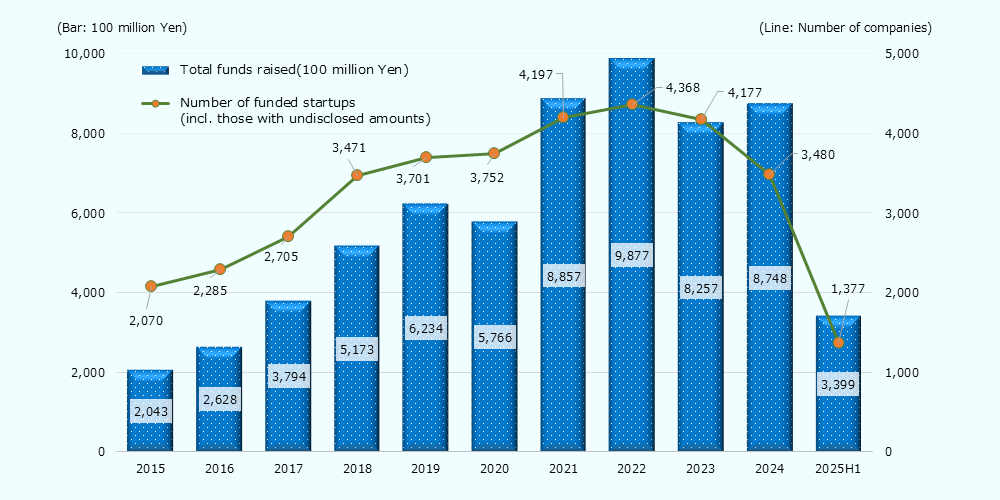
Note 1: The values for each year are based on the data observed up to the time of aggregation; the 2025 figure represents the first half of the year.
Note 2: As the survey progresses, figures—including past figures—may be revised. The impact is greater on cases in recent years and ones involving smaller amounts.
Source: Speeda "Startup Information Research (As of July 19, 2025)"
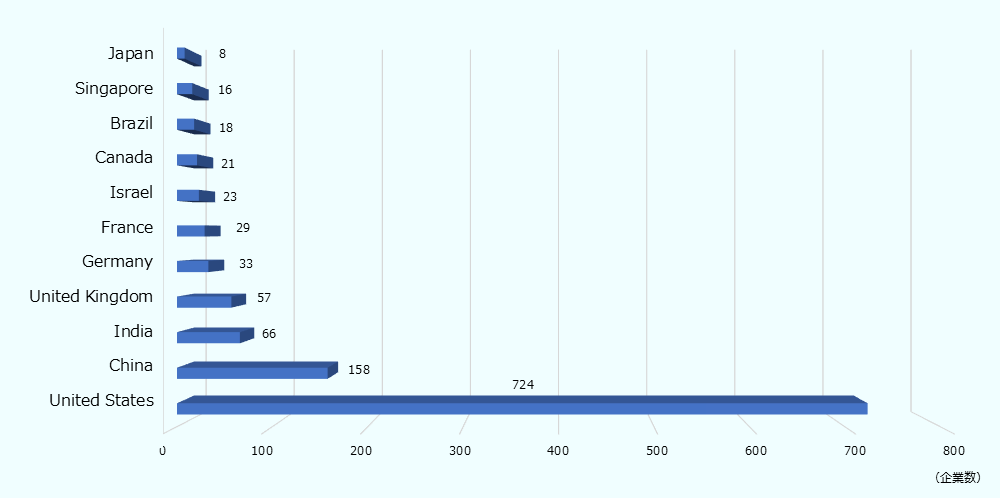
Source: Based on "Private Companies Valued at $1B+" (as of October 7, 2025) in Global Unicorn Club, CB Insights
Shirato: The biggest concern before launching the program was whether we could successfully integrate it into Japan's startup ecosystem, which has its own distinct culture and ways of thinking. Most accelerator programs in Japan are conducted in Japanese and primarily focus on connecting startups with large Japanese corporations and domestic VCs. On the other hand, U.S. accelerators, including Techstars, aim from the outset to build companies that can become unicorns, but such a mindset is not yet established in Japan. Furthermore, all Techstars programs are conducted in English, and it was unknown how many entrepreneurs with a global mindset existed in Japan. That said, while the number may be limited, entrepreneurs like Mr. Goto of AssetHub who aspire to compete on a global stage certainly exist. Our mission is to identify and support such companies.
Tarutani (Moderator): A global mindset is indeed a critical factor. Mr. Goto, I'd like to hear a bit more about the background behind your decision to leave Gaudy and start a business in the U.S.
Goto: In short, I wanted to take on the challenge of creating a model that would work globally. In my view, Japan's Web3 industry has developed its own distinct ecosystem, and while the user base is relatively limited in Japan and the number of active players does not fluctuate dramatically, the industry has had to establish business models that could generate continuous profits. This required prioritizing stability, and I also felt constrained by Japan's unique regulatory environment. In Japan, startups often have only two viable paths to succeed: expanding their services to large corporations or targeting the entire Japanese market of 120 million people. Instead of trying them, I wanted to compete globally from the outset, build something that can be accepted worldwide, and ultimately become a global standard. This desire drove me to launch in the U.S.
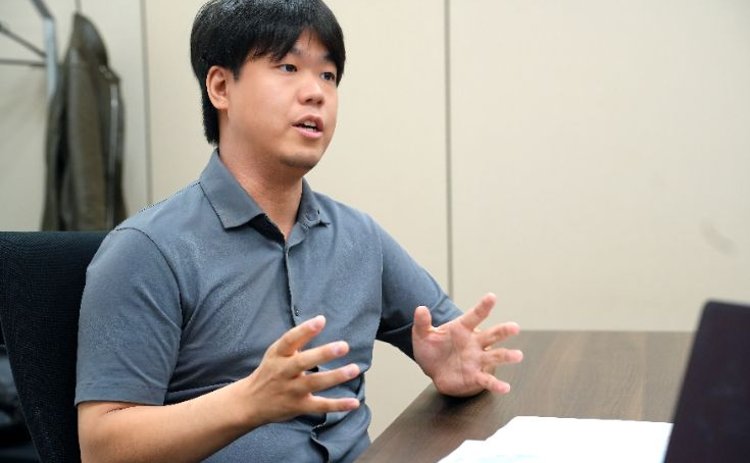
AssetHub CEO Takuya Goto
Tarutani (Moderator): Indeed, Japanese startups, particularly in the B2C domain, tend to target the entire market, from children to the elderly. In contrast, U.S. startups often target niche markets, such as men in their 20s or women in their 40s, secure strong traction within those niches, and then scale globally from there. This approach tends to resonate more effectively, and JETRO also wants this type of model to be adopted more widely in Japan.
Driving Transformation by Embracing U.S. Culture and Mindset
Tarutani (Moderator): Mr. Goto, I imagine that one of the reasons you joined the Techstars program is to position yourself to compete on a global stage. Could you tell us what you gained from participating in the program?
Goto: One of the biggest takeaways for me was gaining access to specific overseas communities. In particular, when launching a business in the U.S., success in hiring and fundraising depends heavily on personal networks and the trust built through those relationships. In Japan, you can often operate without such connections, but in the U.S., to establish an initial foothold, you first need to enter relevant industry communities, build relationships, and gain access through referrals from trusted contacts, and Techstars helped me navigate these steps quickly. In fact, some of the angel investments in this round came through introductions by Techstars. Moreover, being part of Techstars program significantly enhances our credibility, allowing us to maintain ongoing relationships with a broad range of investors and successfully secure funding.
Tarutani (Moderator): Connections and networks are also one of the key areas where we place high expectations on Techstars. Beyond that, what do you believe is necessary to further strengthen Japan's startup ecosystem?
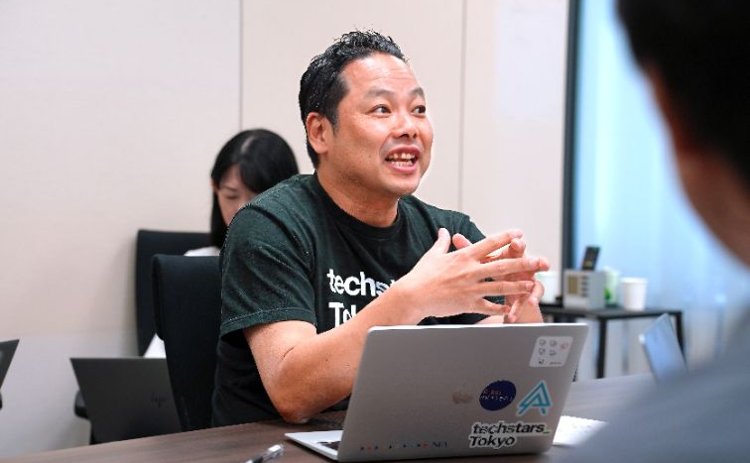
Deputy Director-General, Innovation Department, JETRO Head of JETRO Startup Noriya Tarutani
Shirato: Exactly. Even if you manage to get in, whether you can continue to belong to the community ultimately depends on you. That said, as long as you have something distinctive to offer, the barrier to entry itself seems lower than in Japan.
And, in order as well to sustain the quality of these communities, the second key element is mentors. This again reflects differences in mindset and culture between Japan and the U.S. In Japan, the term "mentor" often brings images of a one-way teacher-student or parent-child relationship and role. In the U.S., however, a mentor is someone who maintains an equal relationship and walks alongside you, while sharing their knowledge and experience with a "Give First" spirit. Notably, two-thirds of Techstars Tokyo's mentors are foreigners whether residing outside or in Japan, many of whom have firsthand experience in achieving global success. For example, Katrina Lake, who at the time became the youngest woman to take a company public on NASDAQ (Stitch Fix); Tom Moss, who has founded multiple companies and achieved successful exits, including co-founding Skydio, the largest drone company in the US; and David Bennett, an angel investor who formerly served as president of Lenovo Japan and a board member of Sanrio. All of them participate with a strong desire to support and mentor Japanese startups.
Tarutani (Moderator): Mentors are certainly a crucial element. Having outstanding individuals who have succeeded overseas come to Japan as mentors for the accelerator program also means bringing in new cultures. Do you see foreign mentors having an inspirational or stimulating impact on Japanese mentors as well?
Shirato: Absolutely. This applies not only to mentors, but also to startups participating in the Techstars program. By maintaining a roughly equal balance between Japanese and international participants, you can clearly see how their different perspectives and pitching methods stimulate each other.

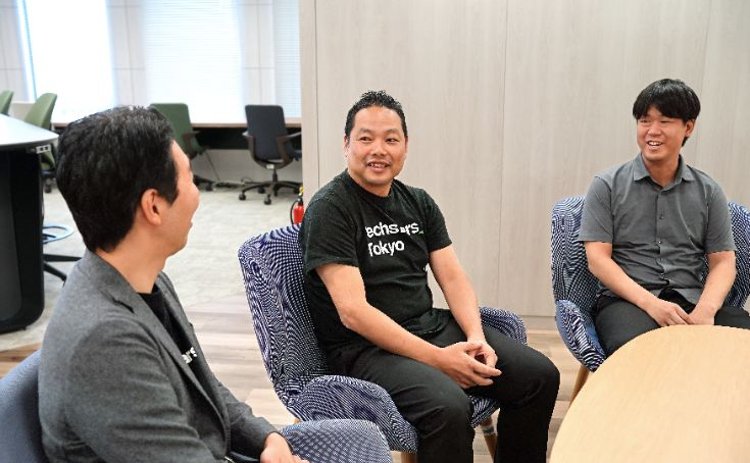
Mentoring session
Tarutani (Moderator): Mentors are certainly a crucial element. Having outstanding individuals who have succeeded overseas come to Japan as mentors for the accelerator program also means bringing in new cultures. Do you see foreign mentors having an inspirational or stimulating impact on Japanese mentors as well?
Shirato: Absolutely. This applies not only to mentors, but also to startups participating in the Techstars program. By maintaining a roughly equal balance between Japanese and international participants, you can clearly see how their different perspectives and pitching methods stimulate each other.
Tarutani (Moderator): I hear that exchanges between domestic and international VCs often lead to mutual benefits.
Shirato: The third element we consider essential for strengthening Japan's ecosystem is equity investment. Among accelerators, Techstars, in particular, takes common stock rather than preferred stock, and works side-by-side with founders. This is what differentiates us from other accelerators and is our core commitment.
Goto: On that third point, taking common stock is a particularly crucial perspective. In equity investment, the focus is often on the size of the equity stake, but recipients should also be mindful of the differences in terms—such as common or preferred stock.
Tarutani (Moderator): In other words, it is an idea that Techstars becomes a kind of co-founder through its investment. We also expect that Techstars' entry into Japan will bring about a cultural transformation.
Fundraising in Japan and a Focus on Industries Where Japan Excels, Such as Entertainment and Manufacturing
Tarutani (Moderator): I'd like to ask about the portfolio companies Techstars Tokyo currently has in Japan.
Shirato: In our first program in 2024, the acceptance rate was around 1%, with 12 companies selected—six Japanese and six overseas. Many of the selected companies, including AssetHub, have successfully raised funds, and in 2025, the number of participants increased by more than 2.5 times. The participating countries and regions have exceeded 120, and the acceptance rate is now well below 1%, making it an extremely competitive gateway. We strongly feel that more startups are now eager to come to Japan.
Tarutani (Moderator): Which countries are they coming from most, and what are they looking for in Japan?
Shirato: The U.S. is by far the largest source, followed by India. In Southeast Asia, the numbers vary by country, but the region as a whole represents a significant share. As for expectations toward Japan, there are two main points. First, many overseas startups actually express a desire to raise funds in Japan. While the VC investment amount in Europe and the United States has fallen compared to a few years ago, the rate of increase in VC investment in Japan is attracting attention, although smaller in absolute terms. In particular, the strong desire to invest in early-stage startups is seen as attractive.
Second, Japan possesses highly competitive industries. Its IP-related content and entertainment fields—such as anime, manga, and games—are unparalleled and something to be proud of globally. Furthermore, Japan's technological capabilities and quality in deep tech and hard tech, such as robotics and manufacturing, continue to be highly regarded around the world. There are cases where overseas startups not only succeeded in raising funds through the Techstars program, but also went on to establish a base in Japan. One example is Dondon Technologies, a U.S.-based startup company providing AI-powered 2D animation production support apps. For them, entering Japan—the heart of IP content and animation—is essential, and they plan to establish a subsidiary and are eager to hire talent in Japan. They also said that JETRO's support services were extremely helpful in this process.
Goto: Looking ahead, in order to scale globally, a PLG (Product-Led Growth) approach—meaning a growth model driven by the product itself—is essential for success. At the same time, while my thoughts are not yet fully crystallized, one thing I'm convinced of is that, Japan's large corporations are extremely powerful, and Japanese founders have relatively easier access to their large capital. It would be wasteful not to leverage that advantage. We must create our own successful business model that combines PLG with business deals and capital alliances with major corporations.
Shirato: It is also important to look beyond the U.S. to other global markets. Given the current rapidly changing situation and geopolitical instability, we are also paying close attention to the Middle East, which is rich in oil money, and Southeast Asia, which is experiencing a remarkable improvement in technological capabilities and has a large number of talented people. Japan is considered as a destination that people around the world want to visit, thanks to its strong soft power, including food and culture. If we can utilize this favorable perception, it will help us attract overseas startups more effectively.
-
*1
A "unicorn" refers to a privately held startup company valued at over 1 billion dollars.

-
*2
An "accelerator" is a support program or organization that accelerates the growth of startups in a short period of time.
-
*3
"Equity" refers to a fundraising method where a company receives investment in the form of shares, etc., thereby strengthening its capital.
-
*4
A decentralized internet built on blockchain and related technologies.
JETRO Invest Japan Report 2025
-
Section1
-
Section2
-
Section3
-
Section4
-
Section1
-
Section2
-
Section3
-
Section4
-
Section5
-
Section1
-
Section2
-
Section3
 (2.9MB)
Laws and Regulations on Setting Up Business in Japan Pamphlet

The pamphlet "Laws & Regulations" is available in PDF, and outlines basic information about laws, regulations and procedures related to setting up a business in Japan. It is available in English and Japanese. You can download via the "Request Form" button below.
Contact Us
Investing in and collaborating with Japan
We will do our very best to support your business expansion into and within Japan as well as business collaboration with Japanese companies. Please feel free to contact us via the form below for any inquiries.
Inquiry FormJETRO Worldwide
Our network covers over 50 countries worldwide. You can contact us at one of our local offices near you for consultation.
Worldwide Offices