




























Advancing Practical Quantum Computing: QuEra Computing's Strategy for Japan
Quantum computers can be broadly categorized into two major computing approaches; the one that excels at general-purpose computation is called the "gate-based approach." Within this approach, there are several different methods, including superconducting, ion trap, neutral atom, photonic, and semiconductor (silicon)-based systems (see the Regional and Analytical Report dated March 13, 2026, "Japan's R&D Capabilities in Advancing Quantum Technology (1): Building Technological Foundations and Development for the Future").
One of the leading companies in the neutral atom approach is QuEra Computing (headquartered in the United States). The company develops and manufactures quantum computers that perform calculations by cooling and controlling neutral atoms with lasers.
QuEra Computing has bases in Japan and Europe in addition to the United States. The company views Japan as being further ahead of other countries in establishing a quantum industry ecosystem, driven by government support and industry-academia-government collaboration. Furthermore, the company has come to realize that, for further development of the quantum industry, it is crucial not only to secure and develop talent but also, as a foreign-affiliated company, to actively participate in the ecosystem while building trusted relationships with Japanese companies.
We interviewed Ayumu Imai, Japan Country Manager, and Naoki Tokushima, Head of Operations at QuEra Computing Japan, about the company's initiatives, its expectations for the Japanese market, and its future ambitions (interview date: May 28, 2026).
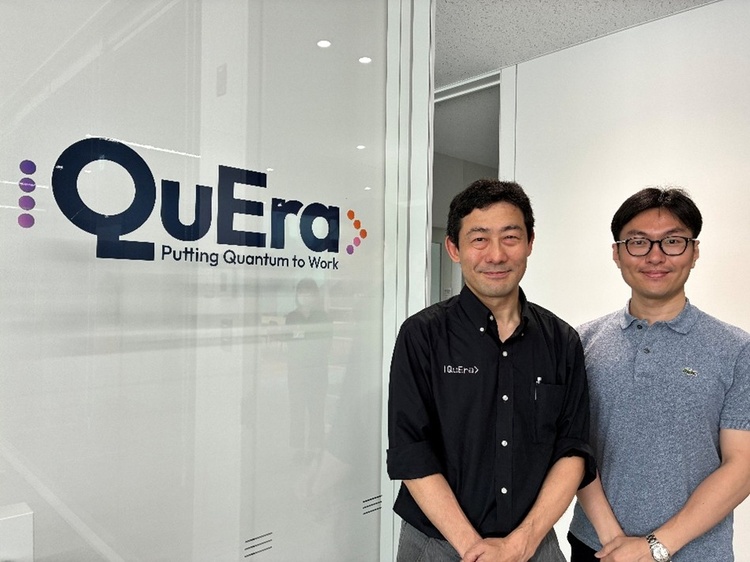
Ayumu Imai (left) and Naoki Tokushima (right) of QuEra Computing Japan
(Photo by JETRO)
Enabling Widely Used Quantum Computing: Collaboration Paves the Way for Practical Application
QuEra Computing, established in 2018 by professors from Harvard University and the Massachusetts Institute of Technology (MIT) in the United States, aims to bring neutral atom quantum computers into practical use. The company collaborates with both universities to deepen academic research while also conducting development, manufacturing, and sales activities aimed at practical application.
For quantum computers to gain widespread practical adoption, a wide range of elements is required—spanning not only hardware, but also algorithms, compilers (software for applying algorithms to quantum computers), and end-user application development, which cannot be covered by a single company. Imai states that, for the practical implementation of quantum computers, it is important to create value for end users through collaboration with other companies.
"Growing the Quantum Industry Together": Japan's Quantum Ecosystem
QuEra Computing Japan was established in November 2024. The company signed an agreement with the National Institute of Advanced Industrial Science and Technology (AIST) and decided to install Gemini, QuEra Computing's second quantum computer, at the Global Research and Development Center for Business by Quantum-AI technology (G-QuAT). At the time of the interview, the company had begun offering some services while undergoing the startup process for full-scale operation. QuEra's first unit, Aquila, has been operating in Boston, U.S., for four years, serving users worldwide for 130 hours per week via Amazon Braket, Amazon Web Services' cloud service. According to the company, Aquila has achieved a utilization rate of 99%, and the operational experience gained from it is being applied to Gemini. Expected use cases include the discovery of new materials for batteries, catalysts, and drug discovery.
While the quantum industry ecosystems are still in the process of taking shape in every country and region, the company views the Japanese market as being ahead of other countries in developing its quantum industry ecosystem with factors such as government financial support and industry-academia-government collaboration. The company notes that Japan's mindset of growing the quantum industry through cooperation rather than competition has contributed to this development.
Establishing Japan's Home-Grown Quantum Technologies Through Collaboration
While Japan has a wealth of accumulated research, no foreign-affiliated company has ever launched a business in Japan to commercialize neutral atom quantum computers. QuEra decided to establish its Japanese subsidiary, judging that there was significant value in doing business in Japan as a global company. The company also viewed it as important to become involved in Japan's emerging quantum ecosystem at an early stage and contribute to the development of the platform. In addition, Japan is home to a large number of component and material manufacturers that support the upstream stages of quantum computer production. In particular, there are many outstanding companies engaged in the supply of optical components required for neutral-atom quantum computers. Collaboration with these component and material companies is essential for improving the performance of QuEra Computing's quantum computers.
At present, QuEra Computing Japan's top priority is to bring the quantum computer installed at G-QuAT into full-scale operation. Looking ahead, the company plans to deepen its collaboration with Japanese companies to promote adoption by end users, while dedicating itself to developing next-generation platforms—specifically by increasing qubit counts and enhancing computational precision. Furthermore, in pursuing its goal of establishing technologies that can only emerge from Japan, the company aims to consolidate more advanced knowledge and technologies and become a hub in Asia.
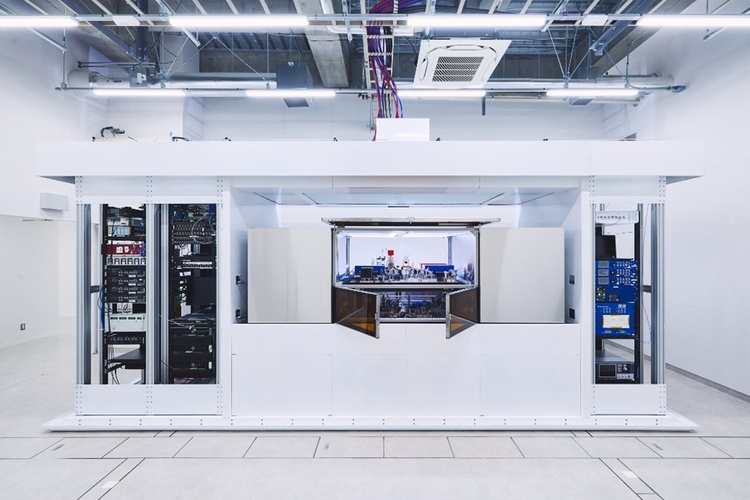
QuEra Computing's neutral atom quantum computer installed at the G-QuAT facility (Courtesy of QuEra Computing)
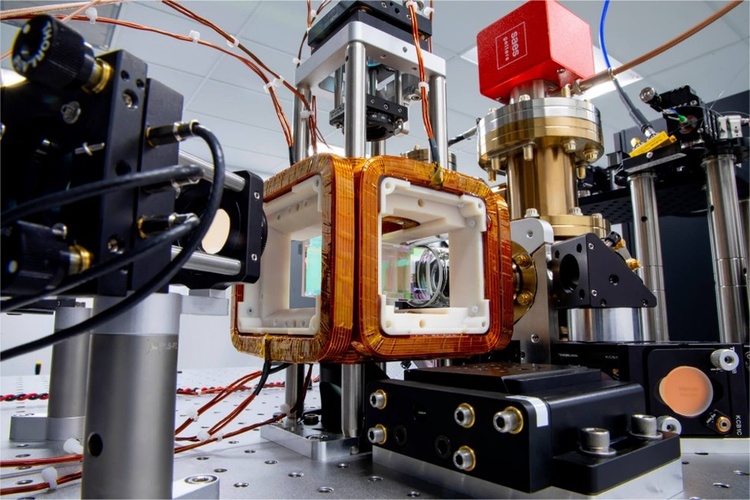
Inside "Aquila," QuEra Computing's quantum system (Courtesy of QuEra Computing)
Taking on New Opportunities with a Japanese-Style Business Mindset
In innovative fields, building platforms and ecosystems is extremely important. Imai states, "We need to take an active role in participating in ecosystems through collaboration with Japanese companies." The company recognizes that building relationships with Japanese companies may sometimes take time, but once trust is established, subsequent discussions and collaboration tend to proceed relatively smoothly. While some overseas companies believe that business proceeds based on agreements between top management, the company points out that building trust at the operational level is also important in Japan. Imai further notes that Japanese organizations often require careful coordination on details, and that understanding such business practices is essential.
Creating Field-Based Use Cases to Drive the Industrialization of Quantum Computing
"The key to accelerating practical application of quantum computing in Japan lies in bridging the gap between the scientific community and industry, specifically end-users," emphasizes Tokushima. Because quantum mechanics deals with atoms and electrons on a scale invisible to the naked eye, attempts to explain the concepts in general terms often become abstract and difficult to understand. Therefore, it is crucial to work closely with end-user companies to align expectations in advance regarding what quantum computers can and cannot do, and then deepen their understanding through hands-on use of the technology. It is important for corporate executives in Japan to deepen their understanding of how quantum computing can be applied within their organizations and to support its adoption, while simultaneously creating an environment in which employees on the front lines can experiment with quantum computing in a variety of situations and create use cases that demonstrate its value.
Japan is now at a critical juncture in determining how effectively it can differentiate itself from other countries in the field of quantum computing. The company expects that Japan can achieve more in terms of funding support and collaboration among industry, academia, and government.
Securing Human Resources Remains a Key Challenge: Domestic Development and Recruitment of Overseas Talent
The quantum industry also faces challenges in securing talent. Drawing on its experience as a company with a multinational workforce, QuEra Computing Japan recognizes that, to attract talent from overseas to Japan, it is important for companies to specifically communicate the appeal of working and living in Japan, not only in terms of compensation and other benefits, but also research and work environments as well as the overall quality of life.
From the perspective of talent development in Japan, according to Imai, there is still a very limited number of individuals who can be described as "quantum natives"—people who think from a quantum-technology perspective. Traditionally, science has been based on an approach where a "problem" is identified first, and its "solution" is then sought. In contrast, the quantum realm requires a different way of thinking and mindset—one that focuses on exploring what quantum technologies may make possible. Quantum-native talent possesses this way of thinking and mindset, and developing such talent requires not only enhancing specialized quantum education at universities but also providing opportunities for students to engage with the quantum world from earlier stages such as secondary education.
From the perspective of developing quantum talent within companies, it is also essential to devise ways to encourage employees to take an interest in quantum technology.
Imai emphasizes that, at the same time as attracting highly specialized talent from overseas, The company considers it important to attract highly specialized talent from overseas while also cultivating domestic talent—individuals interested in quantum technology who can envision new ways to utilize it—for the further development of Japan's quantum industry ecosystem.
Investment and Alliance Division, Innovation Department, JETRO
ABE Kaoruko

Contact Us
Investing in and collaborating with Japan
We will do our very best to support your business expansion into and within Japan as well as business collaboration with Japanese companies. Please feel free to contact us via the form below for any inquiries.
Inquiry FormJETRO Worldwide
Our network covers over 50 countries worldwide. You can contact us at one of our local offices near you for consultation.
Worldwide Offices