



























November 2026
A New Option for Japan's Decarbonization: U.S. Climate Tech Vycarb Accelerates ACCS Commercialization in Japan
Nov 04, 2026
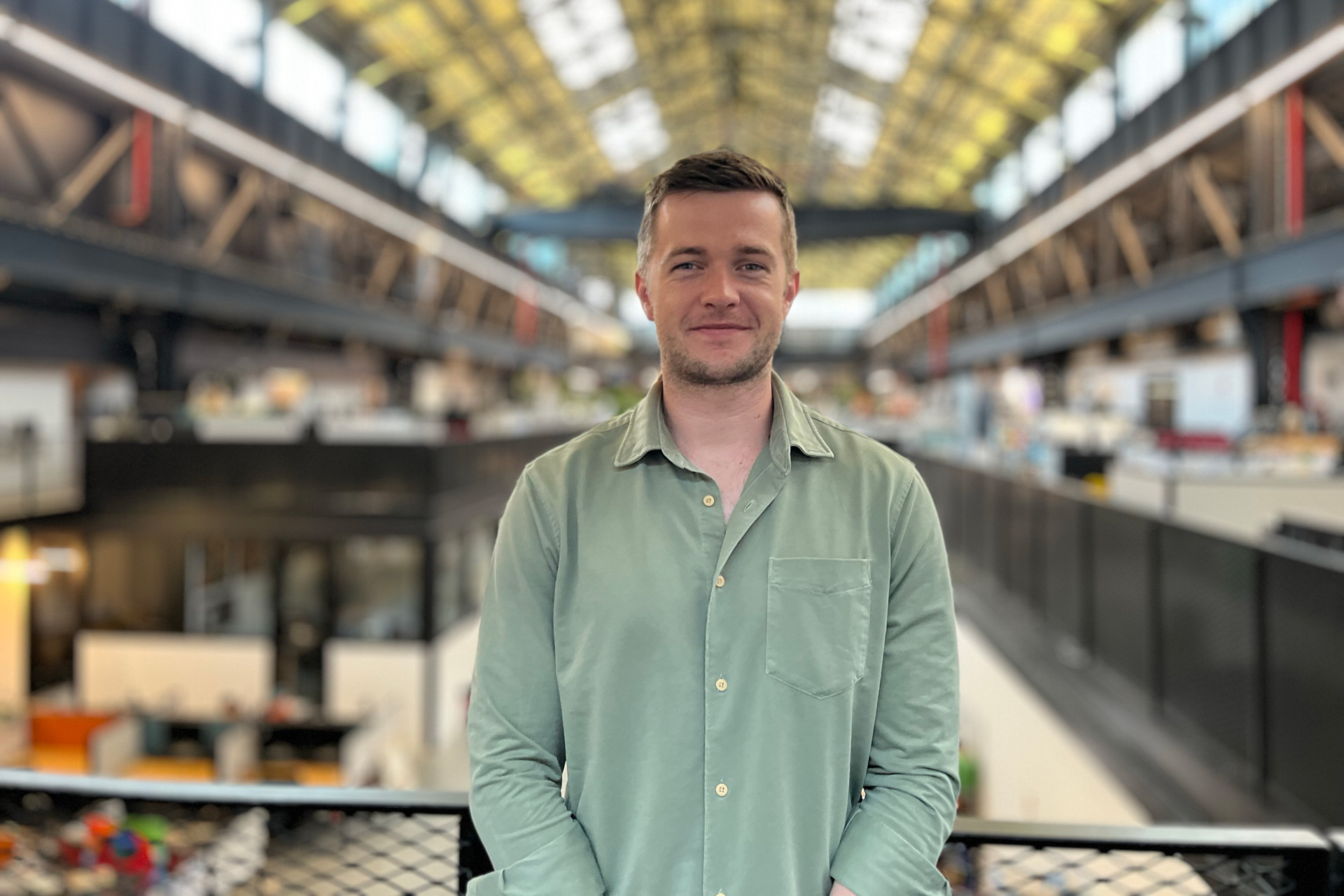
Greg Humphries of Vycarb at Newlab, New York
U.S. Climate Tech Vycarb Eyes Japanese Market with Underwater Carbon Capture and Storage Technology "ACCS"
Toward achieving carbon neutrality, global interest in carbon capture and storage (CCS) continues to grow. Against this backdrop, New York-based climate tech startup Vycarb is advancing its proprietary 'Aqueous Carbon Capture and Storage (ACCS)' technology to capture and store carbon directly in water. Believing that its technology can offer a fresh solution to the CCS challenges facing Japan, the company is expanding into the Japanese market with expectation.
ACCS: A Fresh Approach to Carbon Management Technology
Vycarb positions its ACCS technology as an alternative to ocean alkalinity enhancement (OAE) and conventional geological storage CCS. ACCS technology fixes CO₂ from exhaust gases or water as bicarbonates and carbonates through reactions with water and alkaline minerals, securing it directly in aquatic environments. This technology enables stable, long-term storage of CO₂ by accelerating the ocean’s natural carbon storage mechanism. It features on-site fixation of CO₂ as bicarbonate, eliminating the need for high-pressure compression equipment or CO₂ transport infrastructure.
Additionally, Vycarb’s distinguishing feature is its proprietary sensor technology capable of measuring CO₂ removal in real time. The company has been addressing the challenge of "visualizing storage volumes," a major issue in the decarbonization field. Armed with these self-developed sensors and monitoring technology, they have built a system to measure CO₂ levels in water instantly, achieving highly accurate quantification and verification of storage volumes.
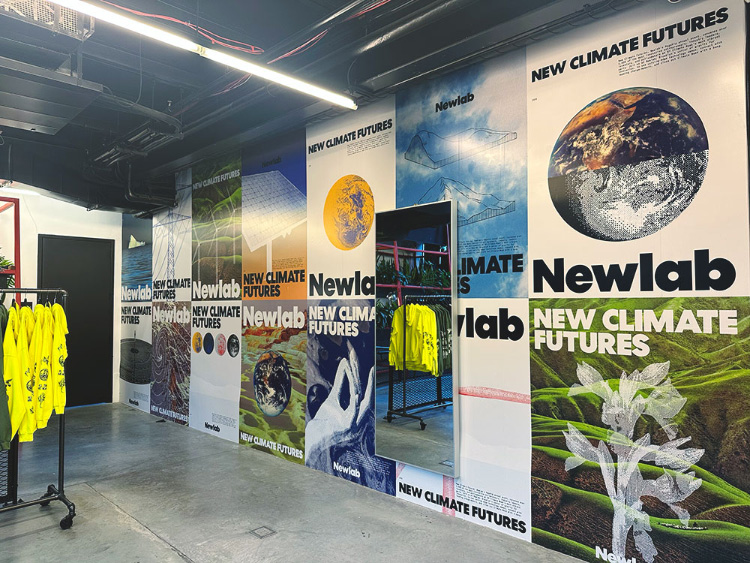
Inside Newlab in New York
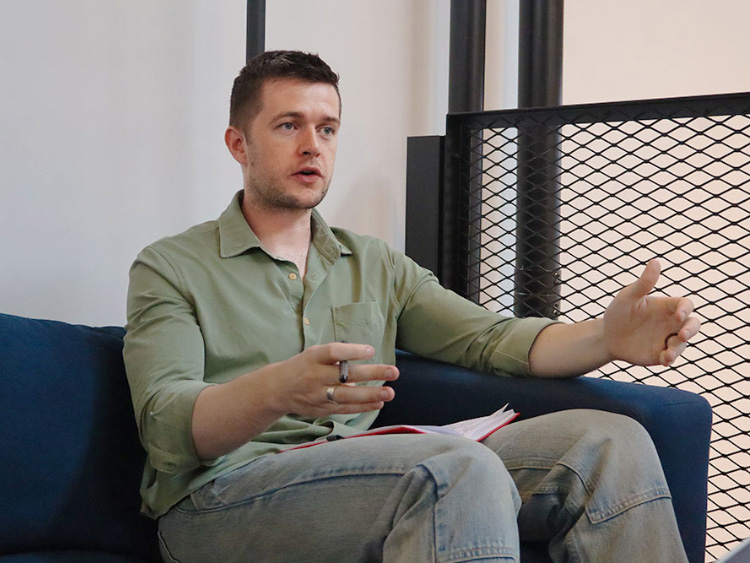
Greg Humphries, Chief Operating Officer of Vycarb
From Demonstration in New York to the Commercialization Phase
Vycarb has conducted demonstrations on Long Island and Governors Island in New York State. They already operate a pilot facility at the Brooklyn Navy Yard with the capacity to process approximately 200 tons of CO₂ annually.
Significantly, the company has successfully demonstrated that the technology can efficiently process exhaust gases with CO₂ concentrations as low as 5 %. This achievement suggests the potential to perform carbon storage across a wide range of industries—including power generation, cement, steel, lime production, and biogas—while reducing dependence on the large-scale CO₂ capture facilities traditionally required.
Currently, they are preparing industrial pilot projects on the scale of several thousand tons per year, targeting subsequent commercial deployment.
Seeing Strong Potential in the Japanese Market
One reason the company is focusing on the Japanese market lies in the country's unique geographical and industrial conditions. While Japan boasts one of the world's leading manufacturing bases, it is widely considered that suitable sites for large-scale underground CO₂ storage are limited. However, the nation possesses a long coastline, with much of its population and industry concentrated in coastal areas. Vycarb sees this environment as highly compatible with its ACCS technology.
Furthermore, the company highly values the advanced engineering capabilities and project development expertise of Japanese companies. Positioning Japan as one of their key markets, they are looking toward future business development and expanded collaboration opportunities.
Toward Realizing Commercial Projects in Japan
Vycarb is already building relationships with Japanese companies and investors, and is utilizing JETRO's open innovation support program "J-Bridge" for market research and partner exploration. They are currently examining specific expansion possibilities within the country.
Going forward, the company aims to realize Japan's first commercial-scale ACCS project around 2029 to 2030. The scope envisions processing over 100,000 tons of CO₂ annually across various sectors, including biogas facilities, cement plants, power stations, sewage treatment plants, and waste incineration facilities.
The company is also showing interest in collaboration with a wide range of partners, including local governments and research institutions.
"We want to make CCS make sense for Japanese companies. Our tech is simple, it's really flexible, and it's safe—we've had all those things demonstrated across a number of different studies," Greg Humphries, Chief Operating Officer of Vycarb stated.
"I think Japan has a fantastic industrial base and manufacturing capability to make really good partners for industrial projects to develop those with us. So, we see great potential for introducing new technologies in the industrial sector, and we want to work together to develop CCS business cases. We're ready to deploy this."
Make the Most of JETRO
We can provide you with the latest regional information from our offices throughout Japan, as well as various support services related to investment in Japan.
Also, as a first step in exploring the potential of this growth market, please take a look at JETRO's "Key Industries for Investment in Japan: Sustainability and Energy" report.
Other Spotlights
-
A New Option for Japan's Decarbonization: U.S. Climate Tech Vycarb Accelerates ACCS Commercialization in Japan
-
[Event Report] HVC KYOTO Held: Expanding International Life Sciences Co-creation from Kyoto to the World
September 2026
-
[Event Report] Kansai Startups Exhibit at VivaTech, One of Europe's Largest Open Innovation Trade Shows
July 2026
Explore More
-
Why Japan
A world-class business environment, Japan provides fertile ground for innovation, and endless possibilities for business expansion. That’ s why global business leaders have chosen to invest here. Work with JETRO to map out a path to success and launch your business in the Japanese market.
-
Attractive Sectors
We introduce Japan's attractive sectors. Learn about each sector's general overview and trends, government initiatives, and alluring markets for foreign companies.
JETRO supports your business in Japan
We provide consistent one-stop service for establishing a base or expanding business in Japan. See the details of support services that JETRO provides when setting up business in Japan.
Contact Us
Investing in and collaborating with Japan
We will do our very best to support your business expansion into and within Japan as well as business collaboration with Japanese companies. Please feel free to contact us via the form below for any inquiries.
Inquiry FormJETRO Worldwide
Our network covers over 50 countries worldwide. You can contact us at one of our local offices near you for consultation.
Worldwide Offices


