





























December 2024
Why the Institut Pasteur Is Building Its Next Global Research Hub in Japan
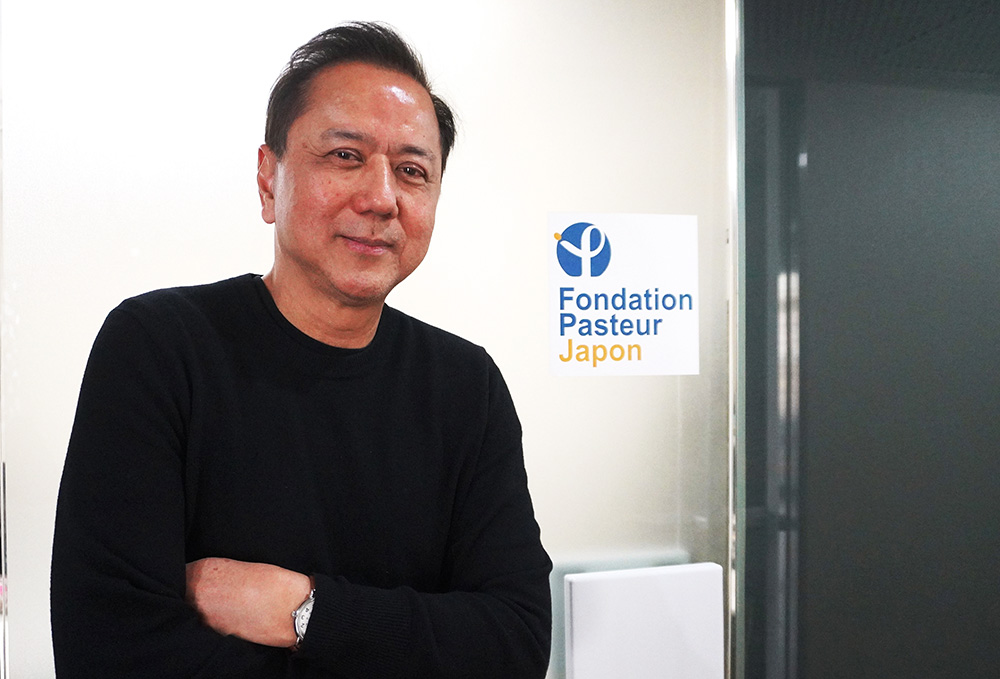
Dr. Anavaj Sakuntabhai
Executive Director
Institut Pasteur du Japon
February 2026
Bridging Precision and Purpose
For more than a century, France's Institut Pasteur has carried science across borders, building a global network in the service of human health. Now that the tradition is finding a new expression in Japan, where a new project aims to deepen links between the country's world-class science and industry and the wider world—turning discovery into impact.
The new initiative, Institut Pasteur du Japon (IPJ), is designed not as a traditional research institute, but as a flexible platform connecting academia, industry, startups, and government. Its mission reflects both Institut Pasteur's global legacy and Japan's evolving needs: to break down silos, support young scientists, and turn scientific discovery into real-world solutions—starting with longevity and planetary health.
"Japan has extraordinary science and extraordinary industry," says Dr. Anavaj Sakuntabhai, Executive Director of IPJ. "The level of precision, reliability, and long-term thinking you find here is exceptional." What the country has sometimes lacked, however, is connective tissue—mechanisms to link basic research with application and domestic strengths with global networks. The goal of IPJ is to build those bridges.
A National Push for Collaboration
Regulatory reforms have paved the way for Institut Pasteur to expand its presence. In 2016, after legal changes made it easier to establish foundations in Japan, a local foundation “Fondation Pasteur Japon” was created, followed by joint research units at Kyoto University and the University of Tokyo. Sakuntabhai, who split his time between France and Japan, was deeply involved. When COVID restrictions extended his stay in Japan, the leadership in Paris saw an opportunity. They asked him to build something new: an office dedicated to expanding Institut Pasteur-style collaborations across the country.
Listening to Japanese scientists, Sakuntabhai heard the same concerns repeatedly. Administrative frameworks, while designed to ensure rigor and accountability, can make it hard to move quickly or experiment with new organizational models. Promising young scientists often move abroad. And while Japan excels at fundamental discovery, it sometimes struggles to translate those discoveries into startups or global products. IPJ's role, Sakuntabhai says, is to complement existing institutions in the most useful way by offering flexibility and international experience.
"We want to have an open platform for collaboration," he says. "We invite everybody in every stage of innovation and development to join us."
That perspective shapes IPJ's approach. It is not a university, not a government lab, and not a company—but it works with all three. Rather than competing for talent or resources, it aims to act as a coordinator and facilitator, helping different parts of ecosystem connect more easily. "If people don't want to talk to each other, that's fine," Sakuntabhai says. "They can talk to us. We coordinate."
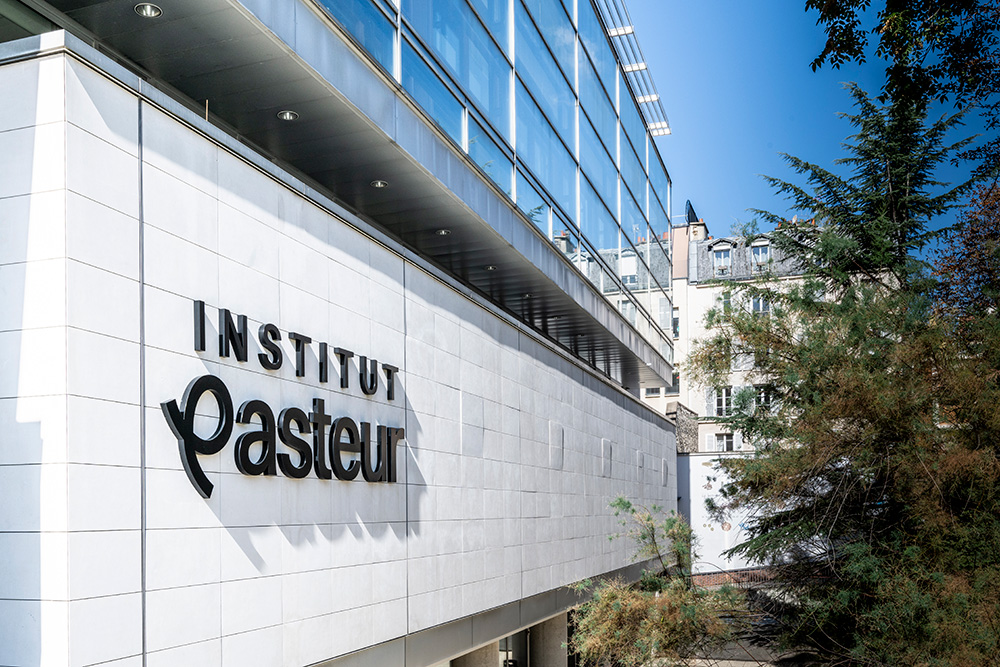
Scientific Information Center building at Institut Pasteur. © Institut Pasteur / François Gardy
Leveraging Japan's Strengths
The flagship focus areas reflect what Sakuntabhai sees as Japan's particular strengths. One focus area is longevity. Japan has the world's highest concentration of centenarians, and decades of experience in public health and preventive care. Yet research into healthy aging remains fragmented across disciplines and institutions. IPJ plans to bring these strands together in a comprehensive, data-driven program, focused not just on disease, but on health—nutrition, exercise, sleep, mental well-being, immune aging, and social connection. The goal is ambitious: a cohort of up to 100,000 participants, contributing biological samples and health data under a system where individuals retain ownership of their data.
Another focus area is planetary health, linking human well-being to environmental sustainability. Here, Sakuntabhai believes Japan offers a distinctive perspective grounded in both tradition and technology. Cultural practices emphasizing moderation, respect for nature, and efficiency intersect with advanced capabilities in materials science, agriculture, and manufacturing. IPJ is already working with partners on sustainable nutrition, including collaborations with food and fisheries companies.
Turning research into impact is another priority. That requires strong mechanisms for innovation—such as patents, startups, and partnerships—often involving overseas investors. Sakuntabhai notes that Japan's funding environment tends to favor steady, incremental growth, which has strengths of its own but can make rapid scaling more difficult. International capital, particularly from the United States and Europe, can help promising projects grow beyond early stages. The "Japan brand," he adds, remains highly trusted worldwide; the challenge is pairing that reputation for quality with greater global visibility and reach.
Anchored by National Strategic Support
Government agencies such as the Japan External Trade Organization (JETRO), the Japan Science and Technology Agency (JST), and the Ministry of Economy, Trade and Industry (METI) play an important enabling role. Their support, Sakuntabhai says, lends credibility and helps IPJ connect to companies, researchers, and investors. Over time, Sakuntabhai hopes IPJ will be seen not as a foreign outpost, but as a Japan-based organization with a distinctly international outlook.
Looking ahead, IPJ plans to establish its own in-house research capabilities, beginning with data science and AI-driven aging research. Japan's regulatory environment—carefully balanced between caution and experimentation—makes it a promising setting for such work, particularly in areas involving sensitive health data.
"We want to bring Japan to the world," Sakuntabhai says, "and bring the world to Japan."


Learn More



Contact Us
Investing in and collaborating with Japan
We will do our very best to support your business expansion into and within Japan as well as business collaboration with Japanese companies. Please feel free to contact us via the form below for any inquiries.
Inquiry FormJETRO Worldwide
Our network covers over 50 countries worldwide. You can contact us at one of our local offices near you for consultation.
Worldwide Offices