




JETRO Global Connection -Accelerate Innovation with Japan-
Interview
How NeuralX is Building the Future of AI with Artificial Life Simulation
(Japan)
June 2026
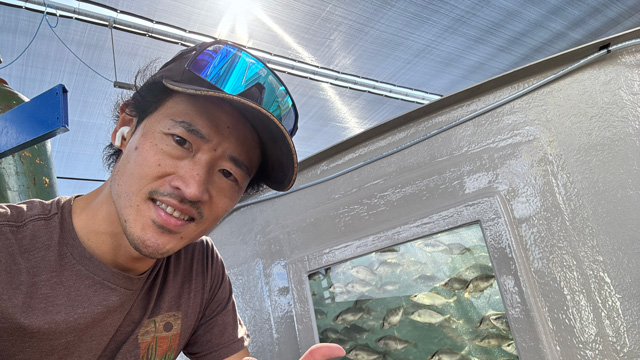
The aquaculture industry faces a persistent challenge: how to monitor fish health, optimize feeding, and accurately estimate inventory in underwater environments where visibility is limited and conditions constantly change. For farmers, uncertainty about fish size and biomass leads to missed revenue opportunities. Inefficient feeding wastes costs. Late disease detection can result in catastrophic losses.
Unlike terrestrial agriculture where drones and sensors can monitor crops, underwater environments remain largely opaque to technology. Traditional monitoring methods rely on human observation and guesswork—an approach that doesn't scale.
Enter NeuralX, a Japanese startup tackling these challenges through artificial life simulation. By creating detailed 3D simulations of fish behavior, the company generates high-quality data that has been nearly impossible to collect in real underwater environments.
"We deliberately chose aquaculture precisely because it is difficult," says Nakada, CEO and founder of NeuralX. "If you start in an easy domain, you are quickly outcompeted by large incumbents."
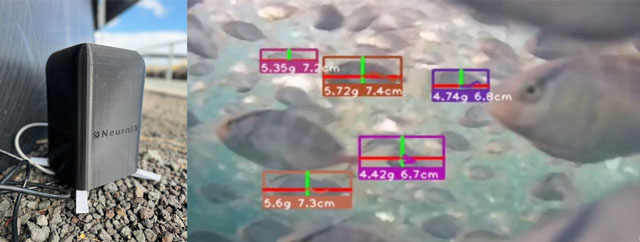
NeuralX's simulation technology creates detailed 3D behavioral data (Photo provided by NeuralX)
For Nakada, whose background is in neuroscience, the path began with a fundamental question: if we can understand how neurons create intelligence in the human brain, could we recreate that intelligence artificially? This led him to establish NeuralX—"Neural" reflecting his foundation in brain science, and "X" representing unlimited possibilities.
Based in Tsukuba, Japan, with operations in California, NeuralX is developing artificial life simulation technology that generates massive 3D behavioral datasets.
Solving the Data Challenge Through Simulation
NeuralX's competitive advantage lies in addressing a fundamental challenge: the next generation of AI requires massive datasets with three-dimensional annotations, which are prohibitively expensive to collect manually.
Using computer graphics technologies, NeuralX creates fully simulated 3D environments that generate unlimited labeled data without human intervention. Because the data is simulated, the company knows the exact internal states—stress levels, hunger, physical condition—of each animal, creating training datasets impossible to obtain in the real world.
Learning from Failure: The Pivot That Shaped Success
NeuralX's journey wasn't always focused on aquaculture. The company initially developed products for fitness and apparel markets—but they didn't sell.
"Technical superiority does not guarantee market success," Nakada reflects. "In fitness and apparel, success depends more on branding and influencers—areas that were not our strengths."
The company made a decisive pivot, preserving its core research expertise while moving toward markets where deep technical capabilities would create decisive competitive advantages. This shaped NeuralX's current philosophy: target the most challenging markets first.
Delivering Value to Aquaculture
Today, NeuralX provides AI solutions through a SaaS model, delivering ROI through feeding cost optimization, inventory management, disease detection, and growth forecasting.
"Inventory management is a universal pain point," Nakada notes. "If farmers could accurately understand fish size and biomass, they could sell 100% of their stock efficiently."
NeuralX has achieved paid proof-of-concept projects—a major milestone. One notable collaboration is with Blue Ocean Mariculture in Hawaii. "We started with an unpaid POC and have now transitioned to a paid contract," says Nakada. "Hawaii offers a beautiful ocean environment for demonstration, and it's one of the limited areas in the United States where open-ocean aquaculture is permitted."
"The project has moved from unpaid demonstration to paid implementation, and we're now entering a phase of scaling up," Nakada explains.
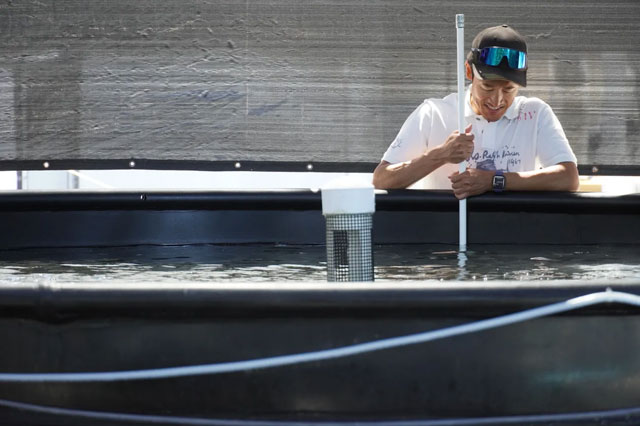
Demonstration of NeuralX’s technology in an aquaculture fish cage (Photo provided by NeuralX)
Global Expansion
With headquarters in Tsukuba and a business base in California, the company strategically chose Japan for its research strength. "Japan—particularly areas like Tsukuba—has a strong culture of deep research and precision," explains Nakada. "For deep tech, Japan is an excellent development base."
NeuralX has participated in JETRO-supported initiatives for overseas expansion. NeuralX joined the J-StarX Europe Long-term course, and "exhibition opportunities such as VivaTech were extremely valuable," Nakada notes. "Longer programs—around one month—were especially impactful. Trust cannot be built in just a few days."
Following its next funding round, NeuralX plans aggressive European expansion, targeting France, Norway, Denmark, Spain, and Italy—major aquaculture markets where the technology can deliver immediate impact.
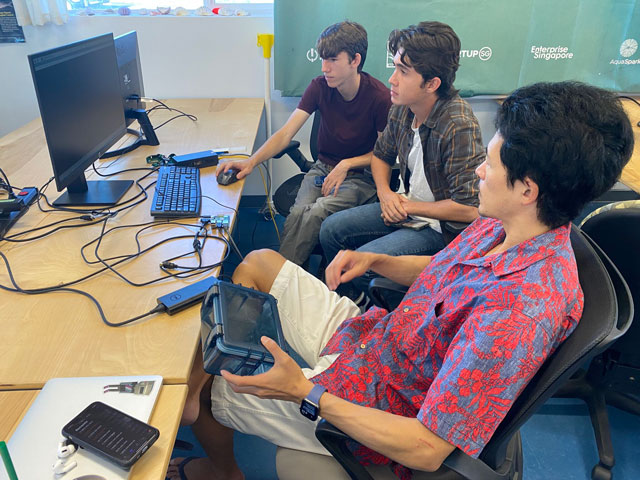
The NeuralX team working on artificial life simulation technology (Photo provided by NeuralX)
A Platform Vision: From Fish to Humans
While aquaculture represents the near-term application, Nakada's vision extends much further—to agriculture, livestock, and eventually human applications in healthcare, security, and retail.
"Our goal is to become the foundational engine for next-generation AI by providing large-scale, high-quality 3D behavioral datasets through artificial life simulation," Nakada declares.
The same core technology analyzing fish behavior can be reconfigured for chickens, pigs, and eventually humans. Each new application builds on the same simulation infrastructure, creating powerful economies of scale.
"We're looking for engineers excited to work on our unique artificial life engine," says Nakada. "We welcome investors and partners who share our vision."
It's an ambitious journey—from neuroscience research to building the data infrastructure that could power the next generation of 3D AI. By starting with the hardest market first, NeuralX is proving that sometimes the most difficult path leads to the most defensible position.
Masaki Nakada
Nakada began his journey in robot control and artificial life research before turning his focus to AI for the ocean.
After studying and conducting research at Waseda University, Intel, and University of California, Los Angeles, he founded NeuralX based on more than a decade of research.
At NeuralX, he develops AI technologies that simulate fish schooling behavior and automatically measure fish population, growth, and health conditions from underwater camera footage.
He was honored to be selected for MIT Innovators Under 35 Japan and Forbes Next 1000.
His mission is to transform the aquaculture industry from one driven by intuition and experience into one powered by data and intelligence.


- Report by:
- Nanami Suzuki, Startup Support Division, JETRO

-
From Japan to Spain: Eco-Pork Brings AI to the Swine Industry

July 2026
-
How NeuralX is Building the Future of AI with Artificial Life Simulation

June 2026
-
US<>Japan VC Playbook: Bridging U.S. and Japanese Startup Ecosystems

February 2026
-
Overview of Japanese Startup Investment for US Venture Capitalists

May 2025
-
TBM, a Japanese Unicorn, is taking its environmentally conscious materials and solutions global

April 2025
-
Algal Bio’s Plan to Scale-up Microalgae Solutions for Food, Health, Climate, and more

March 2025
-
From Complexity to Clarity: How Veritus Helps Professors and Research Labs Innovate 5X Faster

February 2025
-
Biodata bank: Innovating Heat Risk Solutions for a Warming World

February 2025